Si vous lisez ceci, vous vous demandez probablement :
- Est-ce que c'est trop tard pour commencer à apprendre le français ?
- Combien de temps faut-il vraiment pour réussir le TEF Canada ?
- Et quel est le moyen le plus rapide d'y arriver ?
Je reçois ces questions presque tous les jours.
Alors, dans ce guide, je vais vous montrer exactement ce que je ferais si je devais passer le TEF Canada en 2026.
Pas de blabla – juste 4 étapes pratiques qui fonctionnent vraiment.
Et à la fin, je partagerai également quelques ressources que vous pouvez commencer à utiliser tout de suite.
Étape 1 – Comprendre la réalité de l’examen en 2026
Avant toute chose, vous devez comprendre à quoi vous vous préparez réellement.
Pour l'immigration canadienne, les deux principaux examens sont toujours le TEF Canada et le TCF Canada.
En 2026, le TEF Canada est toujours l'option la plus populaire. Je le recommande personnellement par rapport au TCF car, pour de nombreux candidats, les sections d'expression orale et écrite semblent plus structurées et plus faciles à aborder. J'ai également réalisé une vidéo de comparaison complète, n'hésitez pas à la consulter.
Maintenant, voici la plus grande erreur que font la plupart des apprenants :
👉 Ils commencent à apprendre le français sans jamais regarder le format de l'examen.
Ne faites pas ça.
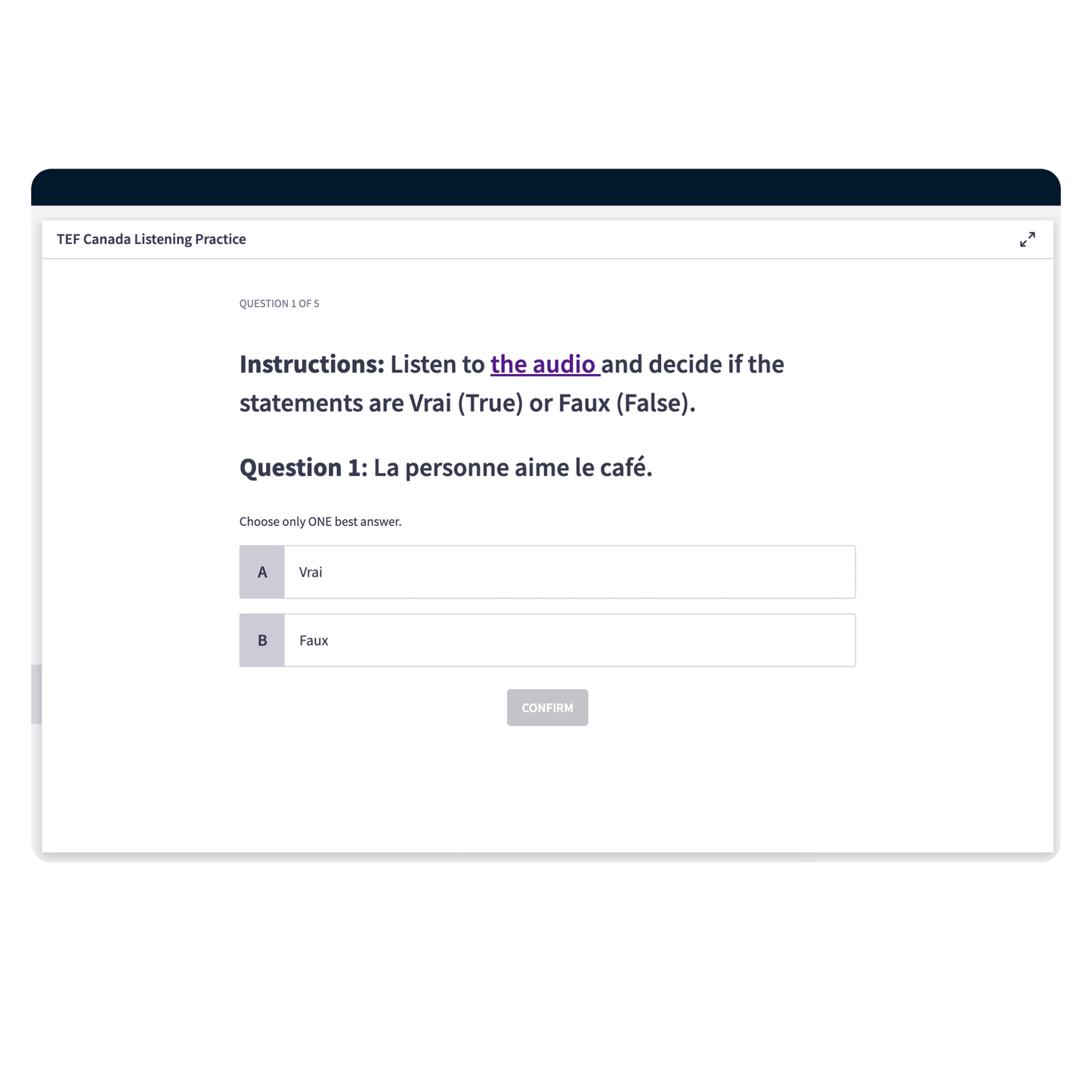
Allez sur le site officiel Le français des affaires et explorez des exemples de questions. Essayez des tâches d'écoute et de lecture, même si vous ne comprenez pas tout.
Pourquoi ?
Parce que vous n'apprenez pas seulement le français, vous vous entraînez pour un format de test.
Et le TEF Canada a 4 sections :
- Compréhension orale
- Compréhension écrite
- Expression écrite
- Expression orale
Ce que je constate le plus en 2026, c'est ceci :
👉 Les étudiants sous-estiment la section d'expression orale.
On s'attend à ce que vous répondiez rapidement, organisiez vos idées et parliez clairement sous pression.
Dès le premier jour, n'ignorez donc pas la pratique de l'expression orale.
Étape 2 – Évaluez clairement votre niveau (et soyez honnête)
C'est là que la plupart des gens gagnent des mois, ou les perdent.
Si je devais recommencer, je testerais immédiatement mon niveau.
Pas deviner. Pas supposer. Le tester réellement.
Parce que votre stratégie dépend entièrement de votre situation actuelle.
Voici un guide approximatif :
- Débutant → environ 9-12 mois pour atteindre le niveau B2 avec un travail constant
- Intermédiaire → environ 3-6 mois
Demandez-vous :
- Est-ce que j'ai plus de mal à comprendre ou à parler ?
- La grammaire me retient-elle ?
- Est-ce que je manque de vocabulaire pour les situations de la vie courante ?

Une fois que vous savez cela, vous pouvez élaborer un plan ciblé au lieu de faire des leçons aléatoires.
Et c'est exactement là que de nombreux apprenants se retrouvent bloqués : pas de structure.
Vous avez besoin d'une progression claire qui développe toutes vos compétences tout en vous préparant spécifiquement au TEF Canada, et pas seulement à un cours de français général.
Je lance mon cours TEF Canada en mai, et je laisserai le lien ici. N'hésitez pas à le consulter.
Étape 3 – Étudier intelligemment (pas seulement avec acharnement)
En 2026, le problème n'est pas le manque de ressources.
C'est même le contraire : trop de ressources, aucune direction claire.
Il y a YouTube, les applications, les outils d'IA, les podcasts... mais sans structure, cela devient accablant.
Alors voici sur quoi je me concentrerais :
Écoute
Utilisez des plateformes comme TV5 Monde ou Radio-Canada.
Entraînez-vous avec du contenu réel :
- conversations
- interviews
- reportages
Lecture
Lisez du français pratique, de tous les jours :
- e-mails
- publicités
- articles courts
Le TEF ne teste pas la littérature, il teste la compréhension du monde réel.

Écriture
Pratiquez des réponses structurées :
- e-mails
- avis
- arguments courts
Privilégiez la clarté, pas la perfection.
Vous pouvez également utiliser des outils comme ChatGPT pour obtenir des retours ou des suggestions. Cela ne remplacera pas un vrai professeur, mais c'est quand même mieux que de pratiquer à l'aveugle.
Expression orale
C'est là que tout change.
- Enregistrez-vous
- Répondez aux sujets courants du TEF
- Parlez à voix haute tous les jours, même seul
Parce que voici la vérité :
👉 Vous ne vous améliorez pas en parlant en réfléchissant. Vous vous améliorez en parlant.
Si possible, travaillez avec un tuteur ou rejoignez des cours de groupe pour obtenir des commentaires.
Étape 4 – Restez constant (même quand la motivation baisse)
Soyons honnêtes.
En 2026, la motivation n'est pas votre avantage, la discipline l'est.
À un moment donné, vous vous sentirez bloqué.
Vous aurez l'impression de ne pas progresser.
C'est tout à fait normal.
Ce qui fait la différence, c'est la constance.
Une chose que je dis toujours à mes élèves :
👉 Ne comptez pas sur la motivation, construisez une routine.

Même 30 à 60 minutes par jour sont plus efficaces que 4 heures une fois par semaine.
Définissez également votre « pourquoi ».
Pourquoi voulez-vous réussir le TEF Canada ?
- Résidence permanente ?
- Meilleures opportunités d'emploi ?
- Une nouvelle vie au Canada ?
Gardez cette raison visible.
Parce que c'est ce qui vous poussera les jours difficiles.
Conclusion – Votre prochaine étape
Si je devais passer le TEF Canada en 2026, je ne compliquerais pas les choses.
Je ferais ce qui suit :
- Comprendre le format de l'examen tôt
- Évaluer clairement mon niveau
- Étudier avec une stratégie intelligente
- Rester constant quoi qu'il arrive
Si vous suivez ces étapes, vous êtes déjà en avance sur la plupart des candidats.
À propos de l’auteur

Bonjour, je suis Umut, une professeure de français certifiée basée à Toronto, titulaire d’un doctorat en études françaises. J’ai aidé des centaines de débutants à acquérir une base solide en français, à améliorer leur confiance et à réussir les examens TEF/TCF Canada pour les demandes de RP canadiennes.
Quand je n’enseigne pas, vous me trouverez en train d’explorer des films français, de créer du contenu pour mes élèves, ou de prendre un café avec un bon livre.